Abstract Borders: Enhancing Design with Minimalist Line Art
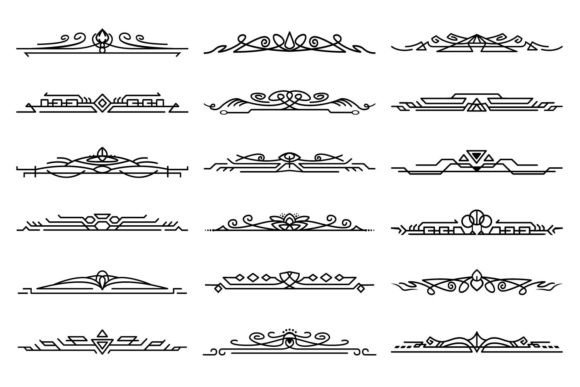
Abstract borders are a versatile design element that can elevate the visual appeal of any project. These minimalist, black thin line designs serve as decorative dividers, text separators, and linear frames. Their simplicity makes them ideal for integrating into various workflows, from graphic design to content creation and beyond.
What Are Abstract Borders?
Abstract borders refer to a collection of design elements characterized by their clean, geometric lines and abstract shapes. Unlike traditional borders, which often feature repetitive patterns or intricate details, abstract borders offer a more subtle and modern approach. They are typically composed of straight lines, curves, and angular forms that create a sense of structure without overwhelming the viewer.
These borders are commonly used in digital and print media to separate sections, highlight key information, or add a touch of sophistication. Their adaptability allows them to fit seamlessly into different design styles, making them a valuable asset for creators across industries.
Where Do Abstract Borders Fit in a Broader Process?
Abstract borders can be incorporated at multiple stages of a project, depending on the specific needs and goals. Whether you're working on a website layout, a marketing brochure, or a personal blog, these design elements can enhance the overall aesthetic and functionality of your work.
Before starting a project, abstract borders can help define the structure and flow of content. During the creative process, they can act as visual guides, ensuring consistency across different pages or sections. After completion, they can be used to refine the final output, adding a polished finish to the design.
Integration with Other Tools and Resources
Abstract borders work well with other design tools and resources, such as vector graphics software, image editors, and layout platforms. For example, when using Adobe Illustrator or Photoshop, you can easily apply abstract borders to text, images, or background elements. This integration allows for greater flexibility and precision in your design workflow.
Additionally, abstract borders can complement other design assets, such as icons, illustrations, and typography. By combining these elements, you can create a cohesive and visually appealing composition that aligns with your brand or project goals.
Practical Implementation Tips
To effectively use abstract borders in your projects, consider the following tips:
- Choose the Right Format: Depending on your needs, select the appropriate file type—JPG for high-resolution images, PNG for transparent backgrounds, or SVG for scalable vector graphics.
- Ensure Compatibility: Verify that the abstract borders you choose are compatible with your design software and project requirements.
- Maintain Consistency: Use abstract borders consistently throughout your design to reinforce visual unity and professionalism.
- Experiment with Placement: Test different placements and sizes to find the most effective way to incorporate abstract borders into your layout.
Workflow Examples
Here are a few examples of how abstract borders can be integrated into different workflows:
- Content Creation: When designing a blog post or article, use abstract borders to separate paragraphs, highlight key points, or divide sections for better readability.
- Graphic Design: In a poster or flyer, abstract borders can frame the main content, draw attention to important details, or add a decorative touch to the overall design.
- Web Development: On a website, abstract borders can be used to separate sections, guide user navigation, or enhance the visual hierarchy of the page.
- Print Media: For printed materials like brochures, business cards, or packaging, abstract borders can add a refined and professional look while maintaining a minimalist style.
Factors to Consider
When working with abstract borders, several factors can impact their effectiveness and usability:
- Preparation: Before applying abstract borders, plan how they will fit into your overall design. Consider the size, placement, and purpose of each border.
- Usability: Ensure that the abstract borders you choose are easy to implement and adjust within your design software.
- Organization: Keep your design files organized by categorizing abstract borders based on their use cases or themes.
- Quality Control: Review your work to ensure that the abstract borders do not interfere with readability or functionality.
- Long-Term Use: Choose abstract borders that are versatile and can be reused across multiple projects, saving time and effort in the long run.
How to Integrate Abstract Borders Into Your Routine
Integrating abstract borders into your daily routine or workflow requires a bit of planning and practice. Start by identifying areas where these design elements can add value. For example, if you frequently create presentations, consider using abstract borders to separate slides or highlight key takeaways.
Another approach is to build a library of abstract borders that you can access quickly. This can be done by organizing your files in a dedicated folder or using design management tools that allow for easy retrieval and application.
Finally, don’t hesitate to experiment with different styles and placements. The goal is to find a balance between aesthetics and functionality that suits your specific needs and preferences.
Conclusion
Abstract borders are a powerful tool for enhancing the visual appeal and organization of your work. Whether you're a designer, marketer, educator, or entrepreneur, these minimalist line art elements can help you achieve a more polished and professional look. By understanding how to use them effectively, you can streamline your workflow and elevate the quality of your projects.